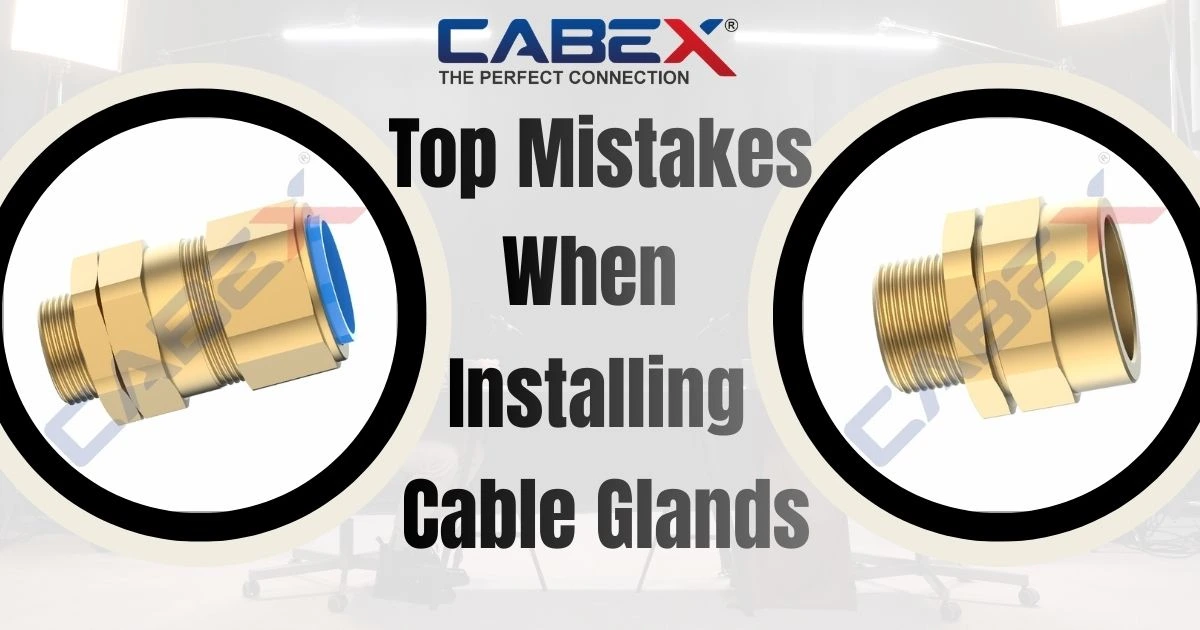
Cable glands may look like small mechanical parts, but they protect entire electrical systems. When installed correctly, they seal, secure, and safeguard cables from dust, moisture, vibration, and strain. When installed incorrectly, they become a weak point that can cause system failure, safety risks, and costly downtime. At Cabex India, we’ve seen how minor oversights during installation lead to major electrical problems. This comprehensive guide explains the most critical Mistakes When Installing Cable Glands, how to prevent them, and what industry standards in 2026 demand from installers and engineers.
Why Cable Gland Installation Is So Important
Cable glands act as sealing devices where electrical cables enter enclosures, panels, or equipment. Their job is simple but critical: provide strain relief, maintain IP rating, ensure mechanical stability, and protect against environmental damage. Yet many system failures today can be traced back to Mistakes When Installing Cable Glands. According to recent industrial reliability studies (2025–2026), nearly 1 in 5 enclosure failures in manufacturing plants result from improper sealing or incorrect gland installation.
A poorly executed cable gland installation can lead to:
- Water ingress
- Dust contamination
- Electrical shorts
- Corrosion
- Equipment overheating
- Fire hazards
Think of a cable gland as the “gatekeeper” of your electrical system. If that gate isn’t secure, everything inside becomes vulnerable. At Cabex India, we emphasize precision in installing cable glands because safety, compliance, and longevity depend on it.
2026 Industry Updates & Compliance Requirements
Electrical safety standards are becoming stricter. With rapid growth in renewable energy, EV charging infrastructure, and smart factories, gland performance expectations are higher than ever.
Latest Trends Affecting Cable Gland Installation
| Industry Trend (2026) | Impact on Installation |
| Increased IP68/IP69K usage | Requires perfect sealing |
| Growth in solar & EV sectors | More outdoor exposure |
| Stricter fire compliance rules | Use of flame-retardant materials |
| Higher automation & vibration | Need stronger strain relief |
Regulatory bodies now require better documentation and traceability of installation practices. As a result, Mistakes When Installing Cable Glands are no longer minor technical errors—they are compliance risks. Regular updates every 6–12 months are recommended for industrial maintenance teams to stay aligned with IEC and ISO standards.
Mistake 1: Selecting the Wrong Type of Cable Gland
One of the biggest Mistakes When Installing Cable Glands is choosing the wrong type.
Not all glands are the same. There are:
- Brass cable glands
- Stainless steel glands
- Nylon glands
- Armored cable glands
- Explosion-proof glands
Choosing the wrong type can cause mechanical failure or loss of sealing performance.
For example:
- Using nylon glands in chemical plants
- Installing single compression glands on armored cables
- Using indoor-rated glands outdoors
These errors are among the top Causes of Cable Gland Failures in industrial audits.
Correct Gland Selection Guide
| Application | Recommended Type |
| Hazardous areas | Explosion-proof |
| Marine/coastal | Stainless steel |
| Indoor commercial | Nylon |
| Armored cable | Double compression |
At Cabex India, we always recommend evaluating cable type, environment, and load conditions before installing cable glands.
Mistake 2: Incorrect Sizing and Measurement Errors
Even a small size mismatch can compromise sealing. Yet incorrect sizing remains one of the most frequent Mistakes When Installing Cable Glands.
If the gland is too large:
- Cable slips
- Water enters enclosure
If too small:
- Insulation damage
- Stress on conductors
How to Measure Properly
- Measure outer diameter (OD) of the cable.
- Check manufacturer’s clamping range.
- Confirm thread compatibility.
Never assume nominal cable size equals gland size. Accurate measurement is essential for proper cable gland installation.
Mistake 3: Poor Sealing and IP Rating Failures
The entire purpose of a gland is sealing. Yet improper sealing is one of the most critical Mistakes When Installing Cable Glands.
Common sealing mistakes:
- Missing washers
- Damaged O-rings
- Cross-threading
- Incorrect torque
IP Protection Comparison
| IP Rating | Protection Level |
| IP54 | Limited dust & splash protection |
| IP65 | Dust-tight & water jets |
| IP68 | Continuous water immersion |
If installed incorrectly, even an IP68-rated gland may perform like IP54. That’s why proper sealing is essential during installing cable glands.
Mistake 4: Over-Tightening or Under-Tightening the Gland
Torque matters more than people think.
Over-tightening:
- Cracks gland body
- Damages cable sheath
Under-tightening:
- Reduces grip
- Breaks seal
Improper torque control is among overlooked Mistakes When Installing Cable Glands. Modern installations increasingly use torque wrenches to maintain accuracy. At Cabex India, we recommend following exact torque specifications mentioned in technical datasheets.
Mistake 5: Ignoring Environmental Conditions
Environment determines gland performance. Ignoring this is a costly error.
Environmental Risk Factors
- UV exposure
- Extreme heat
- Corrosion
- Chemicals
- Vibration
Choosing the wrong material is one of the serious Mistakes When Installing Cable Glands.
| Environment | Best Material |
| Marine | Stainless Steel |
| Chemical | Nickel-plated brass |
| Outdoor UV | UV-resistant nylon |
| High vibration | Double compression gland |
Correct environmental assessment ensures long-lasting cable gland installation.
Mistake 6: Improper Earthing and Bonding
Armored cables require proper grounding. Failure in bonding creates safety hazards. Improper earthing remains one of the dangerous Mistakes When Installing Cable Glands.
Consequences include:
- Shock risks
- Fault current issues
- Code violations
During installing cable glands, always verify:
- Armor clamping
- Earth continuity
- Secure termination
Also evaluate differences between Cable Glands vs Cable Entry Systems when planning grounding strategies.
Mistake 7: Skipping Manufacturer Instructions
Many installers rely on experience and skip manuals. That shortcut often leads to Mistakes When Installing Cable Glands.
Each manufacturer has:
- Specific torque values
- Compatible cable ranges
- Thread requirements
Ignoring documentation reduces reliability. At Cabex India, detailed installation guidelines are provided for every product.
Mistake 8: Using Substandard or Low-Quality Materials
Low-quality glands may look identical but perform poorly.
Problems include:
- Corrosion
- Cracking
- Seal degradation
Using poor-quality products increases downtime and is one of the recurring Mistakes When Installing Cable Glands seen in industrial inspections. When comparing Flexible vs Rigid Conduit Fittings, always ensure compatibility with high-grade glands for long-term performance.
Mistake 9: Poor Cable Preparation
Before installing cable glands, cable preparation must be precise.
Common errors:
- Uneven stripping
- Damaged insulation
- Improper armor cutting
- Leaving sharp edges
These small oversights lead to long-term failures and rank among hidden Mistakes When Installing Cable Glands.
Proper Preparation Steps
- Measure stripping length carefully.
- Use correct tools.
- Avoid conductor damage.
- Clean debris before tightening.
Quick Installation Checklist
Before completing cable gland installation, confirm:
- Correct gland type
- Correct size
- Proper sealing
- Accurate torque
- Environmental compatibility
- Earth continuity
- Manual followed
This reduces Mistakes When Installing Cable Glands significantly.
Error vs Best Practice Comparison
| Common Mistake | Best Practice |
| Wrong gland type | Match to cable & environment |
| Incorrect size | Measure OD accurately |
| Poor sealing | Inspect O-rings & washers |
| Over-tightening | Use torque wrench |
| No grounding | Test earth continuity |
Inspection & Maintenance Guidelines
Regular inspection prevents future issues.
Recommended Schedule
| Application | Inspection Interval |
| Indoor panel | 12 months |
| Outdoor system | 6 months |
| High vibration | 3–6 months |
| Hazardous area | As per regulation |
Look for:
- Rust
- Loose fittings
- Cracks
- Moisture inside enclosures
Proactive maintenance reduces repeated Mistakes When Installing Cable Glands in operational facilities.
Conclusion
Cable glands are small components with massive responsibility. Avoiding Mistakes When Installing Cable Glands protects your equipment, ensures safety, and extends system life. From choosing the right material to ensuring proper torque and sealing, every step matters. In today’s stricter regulatory environment, precision is not optional it’s mandatory. At Cabex India, we are committed to providing high-quality cable glands and expert guidance to ensure safe and reliable installations. If you want durable, compliant, and future-ready solutions, connect with Cabex India today.
FAQs
1. Can a cable gland be reused?
It is not recommended, especially if seals are worn or damaged.
2. What happens if the gland is too tight?
It can damage insulation and reduce cable lifespan.
3. Are brass glands better than nylon?
Brass offers higher strength and corrosion resistance.
4. How do I prevent cable gland failures?
Follow correct installation procedures and avoid common mistakes discussed above.
5. Do I need a torque wrench for installation?
Yes, torque tools improve accuracy and reduce sealing failures.
What are the most common mistakes when installing cable glands?
The most common Mistakes When Installing Cable Glands include wrong sizing, poor sealing, incorrect tightening, ignoring environmental conditions, and improper grounding.
Why is proper cable gland installation important?
Proper cable gland installation protects electrical systems from water, dust, and mechanical strain while maintaining safety compliance.
How often should cable glands be inspected?
Outdoor systems should be inspected every 6 months. Indoor systems typically every 12 months.