In modern electrical and industrial infrastructure, connection reliability is everything. Even the most advanced system can fail if the terminal connection is weak, incorrectly sized, or poorly installed. This is where compression terminals play a decisive role.
At Cabex India, we work closely with EPC contractors, panel builders, OEMs, and industrial buyers who demand safe, long-lasting, and standards-compliant electrical connections. This guide is designed as a complete reference resource—covering everything from Compression Terminals sizes to selection, installation, and future trends. If you want zero guesswork, fewer failures, and maximum system safety, this guide is for you.
What Are Compression Terminals?
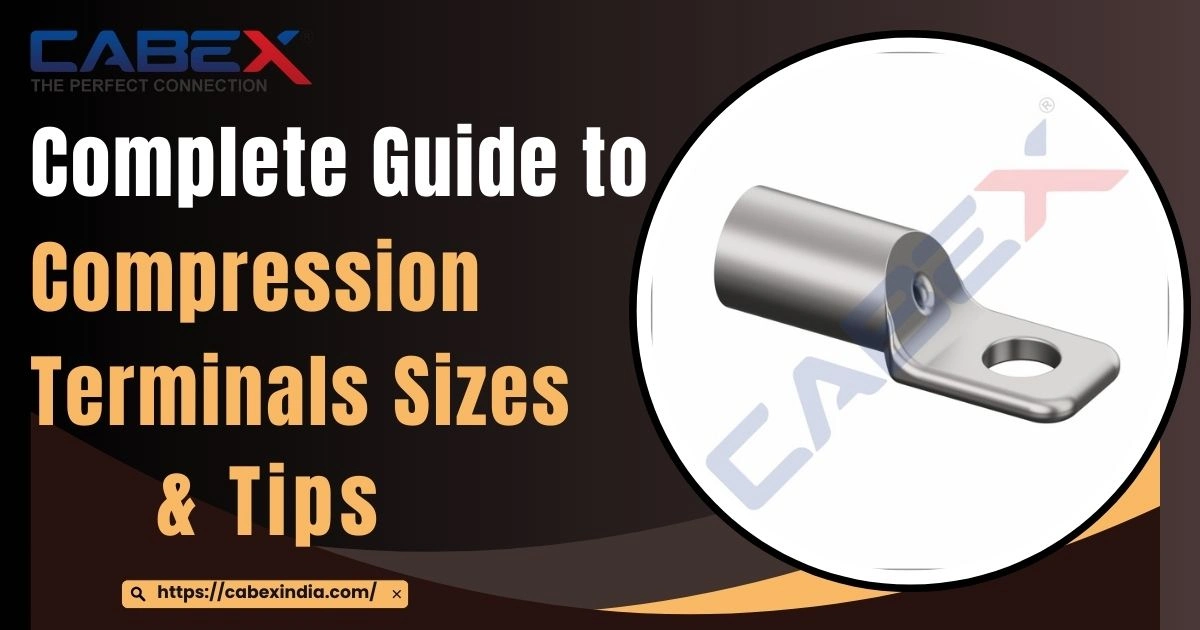
Compression terminals are mechanical electrical connectors designed to securely join electrical conductors to terminals, busbars, or equipment studs through controlled crimping pressure.
Unlike screw-type connectors, compression terminals:
- Do not loosen over time
- Offer consistent electrical conductivity
- Withstand vibration and thermal cycling
Where They Are Commonly Used:
- Power distribution panels
- Switchgear assemblies
- Renewable energy installations
- Railways, oil & gas, and heavy industries
Why Compression Terminals Matter More Than Ever
With increasing:
- Load density
- Voltage levels
- Safety regulations
the importance of choosing correct Compression Terminals sizes has increased dramatically.
Incorrect terminals can lead to:
- Overheating
- Voltage drop
- Arcing and fire hazards
- Equipment downtime
That’s why professional installers rely on engineered compression terminals from Cabex India.
Compression Terminals Sizes – Complete Technical Breakdown
Selecting the right size is not optional—it is mandatory for electrical safety.
What Does Size Actually Mean?
Compression terminal size refers to:
- Cable cross-section (mm²)
- Stud hole diameter
- Barrel length and thickness
Using incorrect Compression Terminals sizes can compromise both mechanical strength and current flow.
Standard Compression Terminals Sizes Table
| Conductor Size (mm)2 | Palm Hole Size (mm) | L (mm) | W (mm) | Unit Weight (Kg) | Code |
|---|---|---|---|---|---|
| 6 | 4 | 21 | 9 | 0.01 | CTL0604 |
| 6 | 5 | 24 | 10 | 0.01 | CTL0605 |
| 6 | 6 | 24 | 11 | 0.01 | CTL0606 |
| 6 | 8 | 25 | 12 | 0.01 | CTL0608 |
| 6 | 10 | 26 | 12 | 0.01 | CTL0610 |
| 10 | 5 | 26 | 11 | 0.01 | CTL1005 |
| 10 | 6 | 26 | 11 | 0.01 | CTL1006 |
| 10 | 8 | 29 | 13 | 0.01 | CTL1008 |
| 10 | 10 | 39 | 16 | 0.01 | CTL1010 |
| 10 | 12 | 39 | 18 | 0.01 | CTL1012 |
| 16 | 6 | 30 | 11 | 0.01 | CTL1606 |
| 16 | 8 | 30 | 13 | 0.01 | CTL1608 |
| 16 | 10 | 35 | 15 | 0.01 | CTL1610 |
| 16 | 12 | 42 | 18 | 0.01 | CTL1612 |
| 25 | 6 | 32 | 14 | 0.01 | CTL2506 |
| 25 | 8 | 32 | 14 | 0.01 | CTL2508 |
| 25 | 10 | 38 | 16 | 0.01 | CTL2510 |
| 25 | 12 | 38 | 18 | 0.01 | CTL2512 |
| 35 | 6 | 35 | 15 | 0.01 | CTL3506 |
| 35 | 8 | 35 | 15 | 0.01 | CTL3508 |
| 35 | 10 | 40 | 15 | 0.01 | CTL3510 |
| 35 | 12 | 40 | 18 | 0.01 | CTL3512 |
| 35 | 14 | 43 | 20 | 0.01 | CTL3514 |
| 50 | 6 | 37 | 17 | 0.02 | CTL5006 |
| 50 | 8 | 37 | 17 | 0.02 | CTL5008 |
| 50 | 10 | 42 | 17 | 0.02 | CTL5010 |
| 50 | 12 | 42 | 17 | 0.02 | CTL5012 |
| 50 | 14 | 45 | 20 | 0.02 | CTL5014 |
| 70 | 6 | 40 | 21 | 0.04 | CTL7006 |
| 70 | 8 | 40 | 21 | 0.04 | CTL7008 |
| 70 | 10 | 46 | 21 | 0.04 | CTL7010 |
| 70 | 12 | 46 | 21 | 0.04 | CTL7012 |
| 70 | 14 | 50 | 21 | 0.04 | CTL7014 |
| 70 | 16 | 50 | 21 | 0.04 | CTL7016 |
| 95 | 6 | 47 | 25 | 0.06 | CTL9506 |
| 95 | 8 | 49 | 25 | 0.06 | CTL9508 |
| 95 | 10 | 49 | 25 | 0.06 | CTL9510 |
| 95 | 12 | 49 | 25 | 0.06 | CTL9512 |
| 95 | 14 | 56 | 25 | 0.06 | CTL9514 |
| 95 | 16 | 56 | 25 | 0.06 | CTL9516 |
| 120 | 8 | 50 | 27 | 0.07 | CTL12008 |
| 120 | 10 | 56 | 27 | 0.07 | CTL12010 |
| 120 | 12 | 56 | 27 | 0.07 | CTL12012 |
| 120 | 14 | 56 | 27 | 0.07 | CTL12014 |
| 120 | 16 | 60 | 27 | 0.07 | CTL12016 |
| 120 | 20 | 66 | 27 | 0.07 | CTL12020 |
| 150 | 8 | 66 | 30 | 0.09 | CTL15008 |
| 150 | 10 | 68 | 30 | 0.09 | CTL15010 |
| 150 | 12 | 68 | 30 | 0.09 | CTL15012 |
| 150 | 14 | 68 | 30 | 0.09 | CTL15014 |
| 150 | 16 | 70 | 30 | 0.09 | CTL15016 |
| 150 | 20 | 75 | 30 | 0.09 | CTL15020 |
| 185 | 10 | 67 | 33 | 0.10 | CTL18510 |
| 185 | 12 | 68 | 33 | 0.10 | CTL18512 |
| 185 | 14 | 68 | 33 | 0.10 | CTL18514 |
| 185 | 16 | 70 | 33 | 0.10 | CTL18516 |
| 185 | 20 | 75 | 33 | 0.10 | CTL18520 |
| 240 | 10 | 88 | 38 | 0.14 | CTL24010 |
| 240 | 12 | 88 | 38 | 0.14 | CTL24012 |
| 240 | 14 | 88 | 38 | 0.14 | CTL24014 |
| 240 | 16 | 88 | 38 | 0.14 | CTL24016 |
| 240 | 20 | 88 | 38 | 0.14 | CTL24020 |
| 300 | 10 | 97 | 41 | 0.17 | CTL30010 |
| 300 | 12 | 97 | 41 | 0.17 | CTL30012 |
| 300 | 14 | 97 | 41 | 0.17 | CTL30014 |
| 300 | 16 | 97 | 41 | 0.17 | CTL30016 |
| 300 | 20 | 97 | 41 | 0.17 | CTL30020 |
| 400 | 12 | 108 | 47 | 0.20 | CTL40012 |
| 400 | 14 | 108 | 47 | 0,20 | CTL40014 |
| 400 | 16 | 108 | 47 | 0.20 | CTL40016 |
| 400 | 20 | 108 | 47 | 0.20 | CTL40020 |
| 500 | 16 | 117 | 53 | 0.50 | CTL50016 |
| 500 | 18 | 117 | 53 | 0.50 | CTL50018 |
| 500 | 20 | 117 | 53 | 0.50 | CTL50020 |
| 630 | 16 | 127 | 63 | 0.80 | CTL63016 |
| 630 | 18 | 127 | 63 | 0.80 | CTL63018 |
| 630 | 20 | 127 | 63 | 0.80 | CTL63020 |
| 800 | 16 | 164 | 70 | 1.00 | CTL80016 |
| 800 | 18 | 164 | 70 | 1.00 | CTL80018 |
| 800 | 20 | 164 | 70 | 1.00 | CTL80020 |
| 1000 | 18 | 164 | 77 | 1.30 | CTL100018 |
| 1000 | 20 | 164 | 77 | 1.30 | CTL100020 |
How to Read Compression Terminal Size Charts
Many failures occur because users misread terminal charts.
What to Verify:
- Cable conductor type (solid / stranded / flexible)
- Copper or aluminum conductor
- Current rating vs ambient temperature
Size Matching Checklist
| Parameter | Importance |
| Cable OD | Prevents loose crimp |
| Barrel length | Ensures full compression |
| Crimp tool | Avoids under/over crimping |
Correct interpretation of Compression Terminals sizes ensures long service life.
Types of Compression Terminals & Uses
Common Types:
- Ring type terminals
- Pin terminals
- Fork terminals
- Bi-metallic terminals
Materials, Coatings & Standards
Popular Materials:
- Electrolytic copper
- Tinned copper (corrosion resistance)
- Aluminum (lightweight applications)
Compliance Standards:
- IS 8309
- IEC 61238
- RoHS
Correct Compression Terminals sizes combined with certified materials drastically reduce failure risks.
How to Choose the Right Compression Terminal
Expert Selection Guide:
- Match cable cross-section exactly
- Verify stud size
- Check current rating
- Consider environmental exposure
Many selection errors mirror issues discussed in Mistakes to Avoid When Installing Brass Fittings—wrong sizing always leads to failure.
Installation Guide: Best Practices
Step-by-Step Installation:
- Strip insulation to recommended length
- Choose correct Compression Terminals sizes
- Insert conductor fully
- Use calibrated crimping tool
- Apply uniform pressure
- Inspect visually and mechanically
Secure cables using Cable Straps And Ties to avoid mechanical stress.
Common Installation Errors
Avoid these mistakes:
- Using pliers instead of crimping tools
- Selecting incorrect Compression Terminals sizes
- Mixing copper and aluminum without bi-metal terminals
Such errors often cause failures similar to poor decisions between Flexible vs Rigid Conduit Fittings wrong choice, wrong outcome.
Latest Industry Trends (2025–2026)
Market Insights:
- Electrical connectors market growing at ~7% CAGR
- Strong demand from EV charging infrastructure
- Rise of flame-retardant terminals
Explosion-sensitive environments are driving demand for certified suppliers such as an Explosion Proof Cable Gland Exporter, influencing terminal design standards. Cabex India updates products every 6–12 months to stay future-ready.
Conclusion
Choosing the correct Compression Terminals sizes is not just a technical decision it’s a safety commitment. From industrial panels to renewable energy projects, every reliable system starts with the right terminal connection. Cabex India stands for quality, compliance, and confidence helping professionals build systems that last. Contact Cabex India today for expert guidance and premium compression terminal solutions.
FAQs
What are compression terminals used for?
They provide safe, vibration-resistant electrical connections for power and control systems.
How do I select correct compression terminal sizes?
Match cable mm² exactly with manufacturer-recommended Compression Terminals sizes.
Can wrong sizes cause overheating?
Yes, incorrect Compression Terminals sizes are a major cause of electrical fires.
Why choose Cabex India?
Cabex India offers tested, certified, and industry-approved compression terminals.