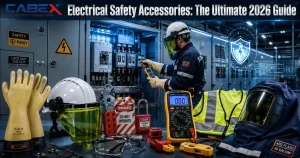

Understanding the different types of electrical accessories is the first step to building a safe, compliant, and long-lasting industrial installation. In short, electrical accessories are the connective components — glands, plugs, earthing parts, and conduit fittings. They protect cables and equipment from moisture, dust, vibration, and explosive atmospheres.
Before you specify a single part, here is what most procurement and project engineers actually want to know:
- How they work: Electrical accessories seal, ground, and mechanically protect cable entries into panels, junction boxes, and enclosures.
- When to use them: Any installation exposed to weather, corrosive air, vibration, or a classified hazardous zone needs the correct accessory type. A generic fitting simply won’t hold up.
- What they cost or involve: Pricing depends on material, IP rating, and certification. Exporters should request a technical datasheet before quoting a project.
This guide breaks down every major category and compares them side by side. It also explains how to choose correctly for oil and gas, power, construction, and telecom projects across the Gulf, Europe, and Southeast Asia.
What Are Electrical Accessories?
Electrical accessories are the smaller, often overlooked components that hold an electrical system together. However, they carry as much safety responsibility as the cable or switchgear itself. A single incorrect fitting can let moisture into a panel, break earthing continuity, or ignite gas in a classified zone. As a result, engineers increasingly treat accessory selection as a compliance decision, not just a procurement line item.
Types of Electrical Accessories Used in Industrial and Hazardous Area Installations
There are five broad types of electrical accessories that cover almost every industrial cabling scenario. Each one solves a different problem, so most projects end up specifying several categories together.
1. Cable Glands and Cable Management Accessories
Cable glands are the most widely used of all types of electrical accessories. They terminate a cable at the point it enters an enclosure. This provides strain relief, environmental sealing, and, for armoured cable, an earthing path back to the system. Cabex India manufactures a full range of industrial and hazardous-area cable glands. The range includes single-compression, double-compression, and Ex-d certified variants for zone 1 and zone 2 installations.
Gland selection depends on cable armour type, diameter, and site conditions. Engineers should always match the gland to the manufacturer’s datasheet rather than assume a universal fit.
2. Thread Conversion and Blanking Plugs
Thread conversion accessories let engineers adapt a gland or conduit entry from one thread standard to another — for example, from metric to NPT. This avoids replacing the entire enclosure. Blanking plugs, meanwhile, seal unused entries so the enclosure keeps its rated ingress protection. Both are essential on retrofit and brownfield projects, where mixed thread standards are common across older and newer equipment.
3. Earthing and Lightning Protection Accessories
Earthing accessories, including earth bosses, tags, and continuity plates, keep fault current flowing safely to ground instead of through personnel or equipment. Lightning protection accessories extend that safety further, directing surge current away from sensitive instrumentation. For coastal, offshore, and high-lightning-risk regions such as the Gulf, correctly rated earthing and surge protection is not optional. It is typically mandated by the site’s electrical safety code.
4. Conduit Fittings and Accessories
It routes and protect cable runs through walls, ceilings, and process areas. Conduit fittings and accessories — couplers, elbows, reducers, and stopping plugs — keep that routing sealed and mechanically sound. In hazardous areas, conduit fittings must carry the same certification as the glands and enclosures they connect to. Mixing certified and uncertified parts on one run is a common, costly compliance mistake.
5. Explosion-Proof and Ex-d Hazardous Area Accessories
The final category covers explosion-proof accessories rated for zones where flammable gas, vapour, or dust may be present. These parts are built and tested to ATEX and IECEx standards, and they must be installed exactly as certified, with no field modification. Oil and gas, petrochemical, and power generation projects rely almost entirely on this category for cable entries in classified areas.
Industries That Depend on the Right Types of Electrical Accessories
Different industries lean on different types of electrical accessories, depending on how harsh the operating environment is. Oil and gas facilities, for instance, rely heavily on Ex-d rated cable glands and certified conduit fittings. A single spark near a hydrocarbon leak can be catastrophic. Power generation and transmission sites, on the other hand, prioritise earthing and lightning protection accessories, since substations and switchyards are common lightning strike points.
Construction and building services projects usually need a broader mix: standard cable glands, thread conversion plugs for retrofits, and IP-rated conduit fittings for exposed wiring. Telecommunication towers, meanwhile, depend on surge protection and weatherproof glanding to keep signal equipment running through storms. Marine and offshore installations combine almost every category at once, because salt air, vibration, and classified zones are all present on the same platform.
Requirements shift so much by sector that export-focused manufacturers such as Cabex India stock multiple types of electrical accessories side by side. They don’t specialise in only one category. That approach lets EPC contractors source glands, earthing parts, and conduit fittings from a single supplier instead of managing several vendors for one project.
Common Mistakes When Specifying Electrical Accessories
Even experienced engineers make avoidable errors when choosing between the different types of electrical accessories available on the market, and these mistakes often surface only after installation. The first common mistake is selecting a gland by cable diameter alone, without checking the armour type. A poor match compromises both strain relief and earthing continuity. The second mistake is skipping certification verification. This can delay customs clearance on export orders once inspectors ask for ATEX or IECEx paperwork that was never requested from the supplier.
A third mistake involves mixing certified and uncertified conduit fittings on the same hazardous-area run. Even one non-compliant component invalidates the entire enclosure’s protection rating. Finally, many projects under-specify IP ratings for coastal or washdown environments, leading to premature corrosion and costly replacement within a few years of installation. Working from a single accessory supplier’s datasheets, rather than mixing parts from several unrelated brands, reduces all four risks at once.
Comparing the Main Types of Electrical Accessories
The table below compares the four types of electrical accessories most projects specify together, so you can see where each one fits.
| Accessory Type | Primary Function | Typical Material | Best For |
| Cable Glands (Ex-d rated) | Cable entry, sealing, strain relief, earthing | Brass, nickel-plated brass, stainless steel | Hazardous zones, offshore, oil & gas |
| Thread Conversion / Blanking Plugs | Thread adaptation, unused-entry sealing | Brass, nylon | Retrofits, mixed-standard sites |
| Earthing & Lightning Protection | Fault current path, surge protection | Copper, tinned copper, brass | Coastal sites, substations, telecom towers |
| Conduit Fittings | Cable run protection and routing | Galvanised steel, brass, PVC | Process plants, commercial construction |
How to Choose the Right Electrical Accessories for a Project
Selecting the right types of electrical accessories for a project comes down to four checks. First, confirm the hazardous area classification, if any, since it determines whether Ex-d certified parts are mandatory. Second, match the material to the environment — stainless steel for corrosive coastal air, brass for standard industrial use. Third, verify the IP rating against the site’s ingress requirements, typically IP66 or IP68 for outdoor and washdown areas. Finally, request third-party certification documents (ATEX, IECEx, or PESO) before finalising any export order, because customs and site inspectors will ask for them.
Compliance Standards That Govern Electrical Accessories
Most types of electrical accessories used in classified areas are tested against IEC 60079, the international standard for explosive atmosphere equipment. It is maintained by the International Electrotechnical Commission. In the European market, accessories must also meet the ATEX equipment directive. Installations following American practice instead reference guidance from the Occupational Safety and Health Administration on hazardous location wiring. According to IEC’s own guidance, equipment certified under one recognised scheme is generally accepted internationally through IECEx mutual recognition. As a result, a single Ex-d certified gland can often serve projects in the Gulf, Europe, and Southeast Asia without re-certification, shortening procurement timelines considerably.
Sourcing Electrical Accessories for Export Projects
Sourcing the right types of electrical accessories for an export project is as much about the supplier relationship as the product itself. Gulf, European, and Southeast Asian buyers usually evaluate suppliers on three things: certification, lead time, and material traceability. A manufacturer that can show ATEX, IECEx, and PESO certificates for the same product line removes a major approval bottleneck at the tendering stage. Lead time matters just as much, since hazardous-area projects often run on fixed commissioning dates and cannot absorb a delayed accessory shipment.
Material traceability rounds out the checklist. Buyers increasingly ask for mill test certificates on brass and stainless steel components. This matters most for offshore and marine contracts, where corrosion failure carries a high safety cost. Suppliers that document all three — certification, lead time, and traceability — tend to win repeat business from EPC contractors rather than one-off orders.
Frequently Asked Questions
What are the main types of electrical accessories used in industrial installations?
The main types are cable glands, thread conversion and blanking plugs, earthing and lightning protection accessories, conduit fittings, and explosion-proof Ex-d components for hazardous zones.
Do all electrical accessories need ATEX or IECEx certification?
No. Only accessories installed in classified hazardous zones need ATEX or IECEx certification; standard industrial or commercial areas typically require IP-rated compliance instead.
What material is best for cable glands in coastal or offshore projects?
Nickel-plated brass or stainless steel is best for coastal and offshore projects, since both resist salt-air corrosion better than plain brass or mild steel.
Can I mix cable glands and conduit fittings from different certification schemes?
It is not recommended, because hazardous-area installations require every connected accessory to share a matching certification scheme to keep the overall enclosure rating valid.
How do I know which IP rating my electrical accessories need?
Check the site’s environmental exposure first. Most outdoor or washdown-prone industrial sites require IP66 or IP68-rated electrical accessories to keep dust and water out.
Conclusion
Choosing the right types of electrical accessories protects both the installation and the people working around it. A project may need cable glands, earthing components, conduit fittings, or fully Ex-d certified parts. Either way, matching the accessory to the site’s classification and environment keeps an installation compliant across export markets. Cabex India supplies all five categories from a single source. This simplifies sourcing for EPC contractors and panel builders working across the Gulf, Europe, and Southeast Asia. For teams comparing the different types of electrical accessories before a tender, one combined datasheet saves time. It is usually faster than collecting separate documents from multiple vendors.
Follow Us On : Twitter, Facebook, LinkedIn
You May Also Like this – Types of Fasteners and Fixings