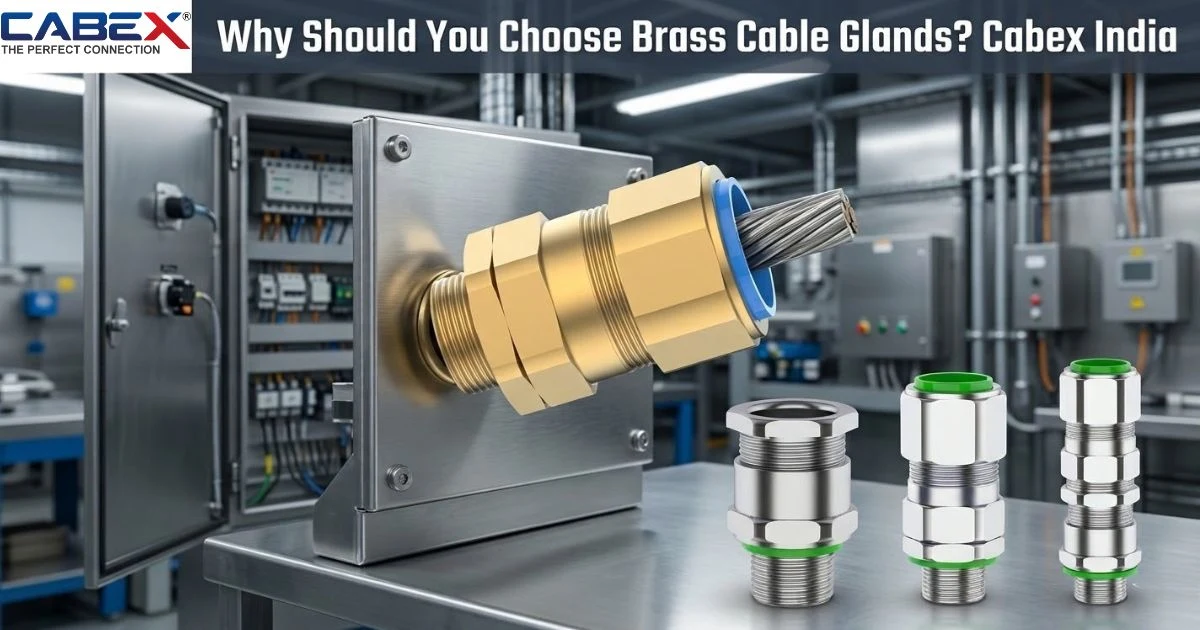
Brass cable glands stand out as a top choice for secure electrical connections in demanding environments. Cabex India, a leading manufacturer, delivers certified, high-quality brass glands tailored for industrial and hazardous applications.
What Are Cable Glands?
Cable glands secure cables entering electrical enclosures, providing strain relief, sealing, and protection against dust, water, and chemicals. They anchor cables mechanically while maintaining IP ratings for ingress protection. Brass versions excel due to their material properties, making them reliable for long-term use.
Superior Material Properties of Brass
Brass combines copper and zinc, offering excellent corrosion resistance through a protective oxide layer. It boasts high mechanical strength to handle vibrations, impacts, and physical stress without deforming. Brass also provides superior electrical conductivity, minimizing signal loss and supporting effective grounding.
Additional benefits include thermal conductivity for heat dissipation and machinability for precise designs. Nickel-plated brass enhances wear resistance and aesthetics while preserving conductivity. These traits ensure brass glands outperform alternatives in harsh conditions.
Key Advantages Over Alternatives
Brass glands resist corrosion better than plastic in wet or chemical environments. They offer greater durability than nylon, handling higher temperatures and mechanical loads. Compared to stainless steel, brass provides similar strength at lower cost, though steel edges out in extreme corrosion.
| Material | Corrosion Resistance | Mechanical Strength | Cost | Weight | Best For |
| Brass | High (forms oxide layer) | Excellent (vibration/impact) | Moderate | Medium | Harsh industrial, marine |
| Nylon/Plastic | Moderate | Low | Low | Light | Indoor, dry |
| Stainless Steel | Highest | Highest | High | Heavy | Extreme corrosion |
| Aluminum | Moderate | Medium | Low | Light | Indoor, lightweight |
This table highlights why brass balances performance and value.
Types of Brass Cable Glands
Common types include single compression for unarmored cables and double compression for armored ones. BW glands suit single-wire armor, while CZ and CW handle braided or steel wire. Hazardous area variants meet explosion-proof standards.
Cabex India offers explosion-proof, flameproof, waterproof, and custom brass glands in single/double compression. Sizes range from small (e.g., PG9) to large (up to 4 inches) for diverse cables.
| Type | Cable Suitability | IP Rating | Typical Use |
| Single Compression | Unarmored (PVC/XLPE) | IP66-IP68 | General industrial |
| Double Compression | Armored (SWA) | IP66-IP68 | Heavy-duty, outdoor |
| BW | Single wire armor | IP68 | Hazardous areas |
| ATEX/IECEx | Unarmored/armored | IP67+ Ex d | Explosive atmospheres |
Certifications and Standards
Brass glands from Cabex India hold ATEX, IECEx, CE, and PESO approvals for global compliance. These ensure safety in Zones 1/2 (gas) and 21/22 (dust). IP ratings like IP66 (jets), IP67 (immersion), and IP68 (submersion) protect against elements. IEC 60079 series governs hazardous use, requiring barrier glands for gas migration risks. Cabex meets BS 6121 for industrial glands.
| Standard | Purpose | Cabex Compliance |
| ATEX/IECEx | Explosion protection | Hazardous area glands |
| IP66-IP68 | Ingress protection | Waterproof variants |
| PESO/CE | India/EU safety | All exported products |
| BS 6121/IEC 62444 | Installation torque | Double compression |
Applications Across Industries
Oil and gas uses brass for offshore/onshore corrosion resistance. Manufacturing relies on them for machinery vibration tolerance. Renewable energy (solar/wind) demands durability in weather exposure. Power plants, railways, and telecom benefit from conductivity and sealing. Marine settings handle saltwater with nickel plating. Cabex serves electrical, construction, and mining sectors.
| Industry | Key Requirement | Brass Benefit |
| Oil & Gas | Corrosion/explosives | ATEX-rated sealing |
| Renewables | Weather/vibration | Long-term durability |
| Railways | Vibration/shock | Mechanical strength |
| Marine | Saltwater | Nickel-plated resistance |
Why Cabex India?
Founded via Accura Industries in 1995, Cabex expanded to exports in 2006 and full glands production in 2018. Their 25,000 sq ft facility in Jamnagar uses advanced tech for zero-defect products. Global reach includes Europe, Middle East, Australia. Cabex specializes in brass hazardous/industrial glands, accessories, earthing, and lightning protection. Custom solutions meet client specs with R&D focus. As one of India’s few ATEX/IECEx certified makers, they ensure reliability.
Installation Guide
Select gland size per cable diameter chart. Slide gland parts onto cable: body, seal, clamp ring. Insert into enclosure, tighten with torque wrench (per IEC 62444). Check seal integrity visually. Cabex glands feature locknuts and earth tags for ease.
Maintenance Best Practices
Monthly visual checks for corrosion/cracks using torch. Annual torque retesting with calibrated tools. Clean threads; replace damaged seals promptly. This extends life, maintaining IP ratings.
Future Trends
By 2026, smart glands with IoT sensors for real-time monitoring grow. Eco-friendly brass recycling and higher IP ratings for climate resilience rise. India’s market expands with infrastructure boom, favoring certified local makers like Cabex.
Case Studies
In Gulf oil rigs, Cabex ATEX brass glands reduced failures by 40% vs. plastic. A solar farm in Rajasthan used IP68 glands, surviving monsoons for 5+ years. Railways reported zero downtime from vibration.
Conclusion
Choosing brass cable glands from Cabex India guarantees durability, safety, and compliance in any tough setting. Their proven track record and innovations make them the smart pick for forward-thinking projects.
FAQs
What makes brass better than plastic glands?
Brass offers superior strength, corrosion resistance, and conductivity for harsh environments.
Are Cabex glands suitable for hazardous areas?
Yes, with ATEX, IECEx, and PESO certifications for explosion-proof use.
How do I select the right size?
Use cable diameter charts; e.g., BC-1 for 20-25mm cables.
What’s the typical lifespan?
10-20 years with maintenance in industrial settings.
Can Cabex customize glands?
Yes, for specific threads, sizes, or finishes.