
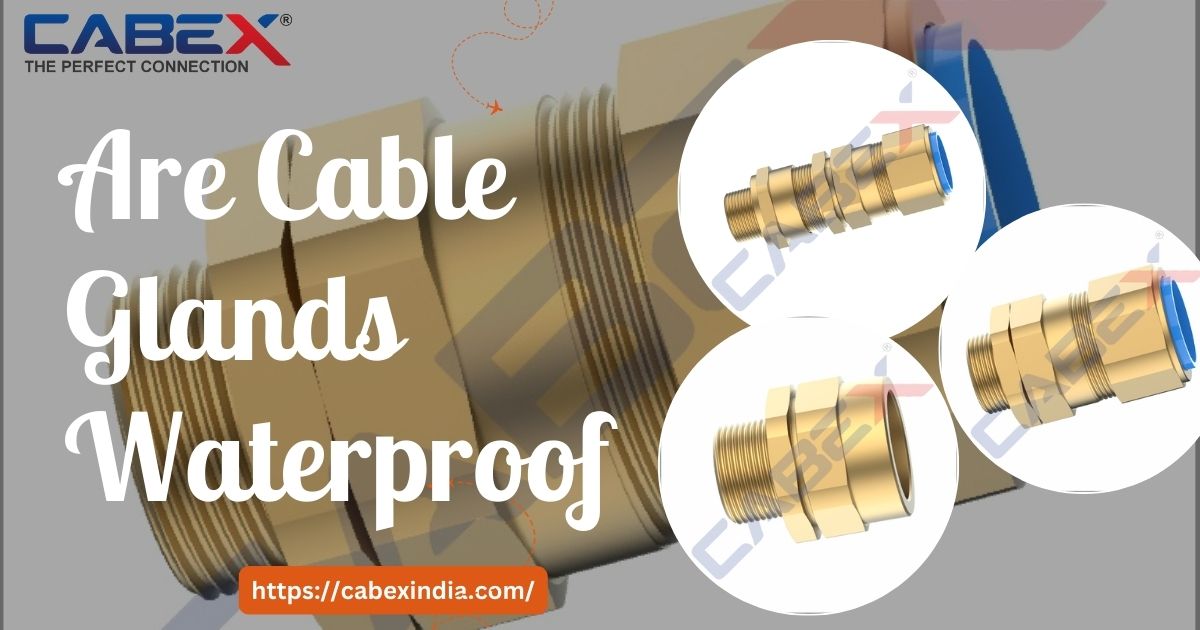
Water and electricity never mix well. Yet in modern industries, electrical cables are constantly exposed to rain, humidity, washdowns, dust, chemicals, and even flooding. This reality leads professionals to ask a very specific and important question: Are Cable Glands Waterproof? At Cabex India, this question comes up daily from engineers designing outdoor panels to maintenance teams fixing repeated failures. The short answer is yes, cable glands can be waterproof. The real answer is far more detailed, and that’s exactly what this guide delivers.
Why Waterproofing Matters More Than Ever
According to global electrical safety data published in late 2025, nearly 60% of outdoor electrical enclosure failures are caused by moisture ingress. Not overloads. Not short circuits. Water.
Modern installations face:
- Heavier rainfall due to climate changes
- More outdoor automation
- Higher washdown pressures in food and pharma plants
- Compact enclosures with little margin for error
This is why the question Are Cable Glands Waterproof is no longer optional—it’s fundamental to system reliability. At Cabex India, waterproofing is treated as a system responsibility, not a single component choice.
Are Cable Glands Waterproof? The Engineering Truth
Let’s be precise.
Yes, cable glands can be waterproof—but only if four conditions are met:
- Correct gland design
- Correct IP rating
- Correct material
- Correct installation
If even one of these fails, the answer to Are Cable Glands Waterproof becomes no, regardless of product quality. This is why experienced engineers never ask if cable glands are waterproof. They ask which one, for what condition, and how long.
What “Waterproof” Really Means in Electrical Systems
In engineering, “waterproof” is defined, tested, and limited.
A Waterproof Cable Gland is designed to resist water under specific conditions such as:
- Water spray from any direction
- High-pressure washdown
- Temporary submersion
- Continuous immersion
- Each condition requires a different design approach. This explains why misunderstandings around Are Cable Glands Waterproof are so common.
IP Ratings Explained Without the Confusion
IP (Ingress Protection) ratings are standardized, but often misunderstood.
IP Ratings in Real Life
| IP Rating | What It Protects Against | Where It’s Used |
| IP65 | Water jets | Outdoor wall panels |
| IP66 | Strong water pressure | Industrial wash areas |
| IP67 | Temporary immersion | Flood-risk zones |
| IP68 | Continuous immersion | Marine & underground |
At Cabex India, IP67 and IP68 glands are increasingly specified for renewable energy and infrastructure projects.
How Waterproof Cable Glands Actually Seal
This is where most articles stop—but we go deeper.
A Waterproof Cable Gland seals using:
- Elastomer compression rings
- Radial pressure around the cable sheath
- Metal-to-metal or polymer-to-metal contact
- Controlled torque
- In Double Compression Cable Glands, sealing occurs at two independent points, offering redundancy in harsh conditions.
Understanding this mechanism makes the answer to Are Cable Glands Waterproof far more predictable.
Types of Waterproof Cable Glands
Not all waterproof glands work the same way.
Common types include:
- Single compression glands (basic protection)
- Double Compression Cable Glands (industrial reliability)
- Barrier glands (hazardous zones)
- Armored and unarmored variants
- Each type exists because environments vary. One design cannot solve all waterproofing challenges.
Materials That Decide Long-Term Performance
Material choice directly impacts sealing lifespan.
Material vs Performance
| Material | Waterproof Reliability | Best Use Case |
| Nylon | High | Light industrial & outdoor |
| Nickel-Plated Brass | Very High | Heavy industry |
| Stainless Steel | Extreme | Marine & chemical plants |
A stainless-steel Waterproof Cable Gland resists corrosion, UV radiation, and chemical attack far better than plastic alternatives.
How to Pick the Right Gland for Any Environment
To Pick the Right Gland, stop thinking only about cable size.
Instead, evaluate:
- Water exposure type (rain, spray, immersion)
- Temperature fluctuations
- Vibration or movement
- Chemical or salt exposure
- System designers often compare Flexible vs Rigid Conduit Fittings alongside glands to ensure a fully sealed cable path.
When chosen correctly, the question Are Cable Glands Waterproof becomes irrelevant—because failure is engineered out.
Design vs Installation: The Hidden Failure Gap
Field studies show most “waterproof failures” are not product defects.
They are caused by:
- Incorrect hole size
- Uneven cable sheath
- Over-tightening seals
- Reusing compressed glands
This is why Are Cable Glands Waterproof should always be followed by “were they installed correctly?”
How to Install a Waterproof Cable Gland Correctl
Here’s the simplified, correct method for How to Install a Waterproof Cable Gland:
- Drill a clean, burr-free hole
- Insert gland body squarely
- Tighten locknut evenly
- Insert cable without twisting
- Compress seal until snug
A properly installed Waterproof Cable Gland will not allow cable movement or visible gaps.
Environmental Factors Most Guides Ignore
Real-world conditions include:
- Thermal expansion and contraction
- UV degradation over years
- Continuous vibration
- Aging elastomer seals
This is why Cabex India designs glands for long-term seal retention, not just lab tests.
Where Waterproof Cable Glands Are Used Today
Modern applications include:
- Solar and wind energy plants
- Food & beverage washdown zones
- Water treatment facilities
- Hazardous areas (where teams may Buy Explosion Proof Cable Glands Online)
In all these cases, asking Are Cable Glands Waterproof is directly linked to safety and compliance.
Conclusion
So, Are Cable Glands Waterproof? Yes when engineering, material science, and correct installation work together. With expertly designed solutions from Cabex India, waterproofing becomes reliable, predictable, and long-lasting—protecting not just cables, but entire electrical systems. Choose Cabex India for cable glands built for real environments, not assumptions.
FAQs
Are Cable Glands Waterproof by default?
No. Waterproofing depends on design, rating, and installation.
Which IP rating is best for outdoor use?
IP66 or higher is recommended.
Does material affect waterproofing?
Yes. Stainless steel offers the highest resistance.
Can waterproof glands fail over time?
Yes, if exposed to harsh conditions without maintenance.
Does Cabex India offer selection support?
Yes, expert technical guidance is available.