
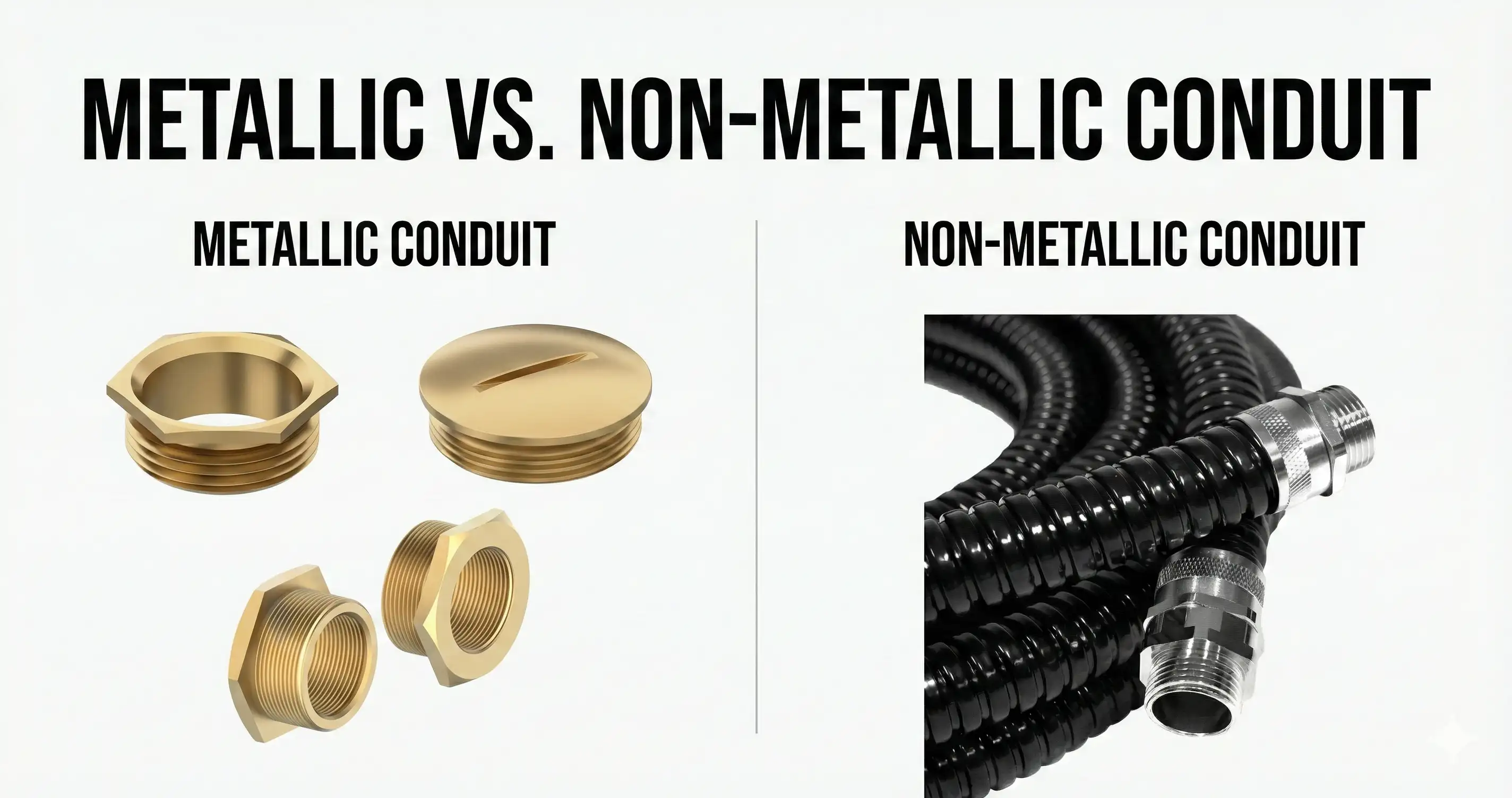
Choosing the right electrical conduit is no longer a routine engineering decision. It directly affects safety compliance, operational reliability, and long-term cost efficiency. With industries moving toward automation, renewable energy, and smart infrastructure, the conversation around Metallic vs. Non-Metallic Conduit has become more relevant than ever. At Cabex India, we work with contractors, EPC firms, and industrial planners who want solutions that last—not shortcuts that fail later. This guide breaks down the real-world differences between metallic and non-metallic conduits using updated standards, practical use cases, and clear comparisons. If you’ve ever wondered which conduit is right for my project, this guide will give you clarity.
What Is Electrical Conduit and Why It Matters
Electrical conduit is a protective pathway that houses and safeguards electrical wiring. It prevents damage caused by moisture, chemicals, heat, mechanical impact, and fire hazards. Beyond protection, conduit systems improve organization, simplify maintenance, and help installations meet electrical codes.
Modern conduit systems often integrate accessories such as Cable Glands vs Cable Entry Systems, ensuring proper sealing, grounding, and strain relief. Without the right conduit, even the best cables are vulnerable.
Why the Metallic vs. Non-Metallic Conduit Debate Is Critical in 2026
According to recent market data, the global electrical conduit market is projected to grow at over 6% annually through 2030, driven by:
- Smart factories
- EV charging infrastructure
- Renewable energy projects
- Data centers
New NEC and IEC updates emphasize fire resistance, grounding efficiency, and environmental durability. Choosing incorrectly in the Metallic vs. Non-Metallic Conduit debate can lead to safety violations, higher maintenance costs, and system failures.
Metallic Conduit: Strength, Safety, and Structure
Metallic conduit is typically manufactured from galvanized steel, stainless steel, or aluminum. It is widely used in commercial and industrial installations where protection and grounding are critical.
Types of Metallic Conduit
| Type | Common Application | Key Benefit |
| Rigid Metal Conduit (RMC) | Heavy industry | Maximum impact protection |
| Intermediate Metal Conduit (IMC) | Commercial buildings | Lighter than RMC |
| Electrical Metallic Tubing (EMT) | Indoor installations | Easy bending |
| Flexible Metal Conduit (FMC) | Machinery | Vibration tolerance |
Advantages and Limitations
Advantages
- Excellent mechanical protection
- Natural grounding path
- High fire resistance
- Long service life (40–50 years)
Limitations
- Higher upfront cost
- Skilled labor required
- Potential corrosion without coating
Non-Metallic Conduit: Flexibility, Cost, and Corrosion Resistance
Non-metallic conduits are commonly made from PVC, HDPE, or nylon. They are widely used where corrosion resistance and ease of installation are priorities.
Types of Non-Metallic Conduit
| Type | Application | Key Feature |
| PVC Conduit | Underground wiring | Corrosion-proof |
| ENT (Smurf Tube) | Residential walls | Highly flexible |
| HDPE Conduit | Fiber & data | Lightweight |
Advantages and Limitations
Advantages
- Lower material cost
- Quick installation
- Resistant to chemicals and moisture
- Lightweight and easy to handle
Limitations
- Lower impact resistance
- Requires separate grounding
- UV protection needed outdoors
Metallic vs. Non-Metallic Conduit: Side-by-Side Comparison
| Feature | Metallic Conduit | Non-Metallic Conduit |
| Strength | Very high | Moderate |
| Cost | Higher | Lower |
| Corrosion Resistance | Moderate | Excellent |
| Grounding | Built-in | External conductor |
| Installation Speed | Slower | Faster |
This table highlights why Metallic vs. Non-Metallic Conduit is about application suitability, not superiority.
Metallic vs Non Metallic Liquid Tight Conduit: Wet & Harsh Environments
In wet, oily, or dusty environments, metallic vs non metallic liquid tight conduit becomes a crucial decision.
- Metallic liquid-tight conduit offers superior mechanical protection and EMI shielding.
- Non-metallic liquid-tight conduit excels in chemical resistance and flexibility.
Industries such as food processing, water treatment, and outdoor machinery increasingly evaluate metallic vs non metallic liquid tight conduit solutions to balance durability with ease of maintenance. The growing demand for hybrid systems proves that metallic vs non metallic liquid tight conduit is no longer a one-size-fits-all choice.
Safety Codes, NEC Updates, and Compliance Trends
As of 2026, NEC updates focus on:
- Enhanced grounding continuity
- Arc-fault mitigation
- Fire-rated conduit materials
Metallic conduits naturally comply with grounding requirements. Non-metallic conduits must integrate grounding conductors and compatible accessories. In hazardous zones, conduit systems are often paired with certified components from an Explosion Proof Cable Gland Exporter to meet ATEX and IECEx norms.
Cost, Durability, and Lifecycle Analysis
| Cost Factor | Metallic | Non-Metallic |
| Initial Cost | High | Low |
| Installation | Labor-intensive | Quick |
| Maintenance | Minimal | Moderate |
| Lifespan | 40–50 years | 20–30 years |
From a lifecycle perspective, Metallic vs. Non-Metallic Conduit decisions often favor metallic in industrial settings and non-metallic in residential or corrosive environments.
Installation, Maintenance, and Expansion Flexibility
Non-metallic conduit is easier to cut, bend, and modify, making it ideal for fast-track projects. Metallic conduit requires precision but offers superior long-term reliability. Supporting accessories often detailed in a Cable Straps And Ties Guide play a vital role in maintaining system integrity and organization.
Best Applications by Industry
| Industry | Recommended Conduit |
| Manufacturing | Metallic |
| Residential | Non-Metallic |
| Oil & Gas | Metallic |
| Renewable Energy | Mixed |
| Water Treatment | Non-Metallic |
This is why professionals continuously reassess Metallic vs. Non-Metallic Conduit for each project.
Sustainability and Future Conduit Trends
Sustainability is reshaping conduit manufacturing:
- Recyclable steel conduits
- Low-smoke, halogen-free PVC
- Longer lifecycle designs
Cabex India actively aligns its conduit solutions with ESG goals and modern environmental standards.
How to Choose the Right Conduit for Your Project
Ask yourself:
- Is the environment corrosive or impact-heavy?
- Do local codes require grounding through conduit?
- What is the total lifecycle cost?
Answering these questions makes Metallic vs. Non-Metallic Conduit decisions simpler and more reliable.
Conclusion
The decision between Metallic vs. Non-Metallic Conduit directly affects safety, durability, and cost efficiency. Metallic conduit remains the backbone of industrial and high-risk installations, while non-metallic conduit delivers flexibility and corrosion resistance where conditions demand it. With evolving standards and complex project requirements, partnering with a trusted manufacturer like Cabex India ensures compliance, performance, and peace of mind. Choose wisely—your electrical infrastructure depends on it.
FAQs
1. Which conduit is safer—metallic or non-metallic?
Metallic offers superior impact protection and grounding.
2. Is non-metallic conduit allowed in industrial projects?
Yes, in low-impact and corrosive environments.
3. Which lasts longer?
Metallic conduit typically outlasts non-metallic.
4. Can non-metallic conduit be used outdoors?
Yes, with UV-resistant material.
5. Does Cabex India supply both types?
Yes, Cabex India provides a full range of compliant conduit solutions.